September 8 – September 14, 2025
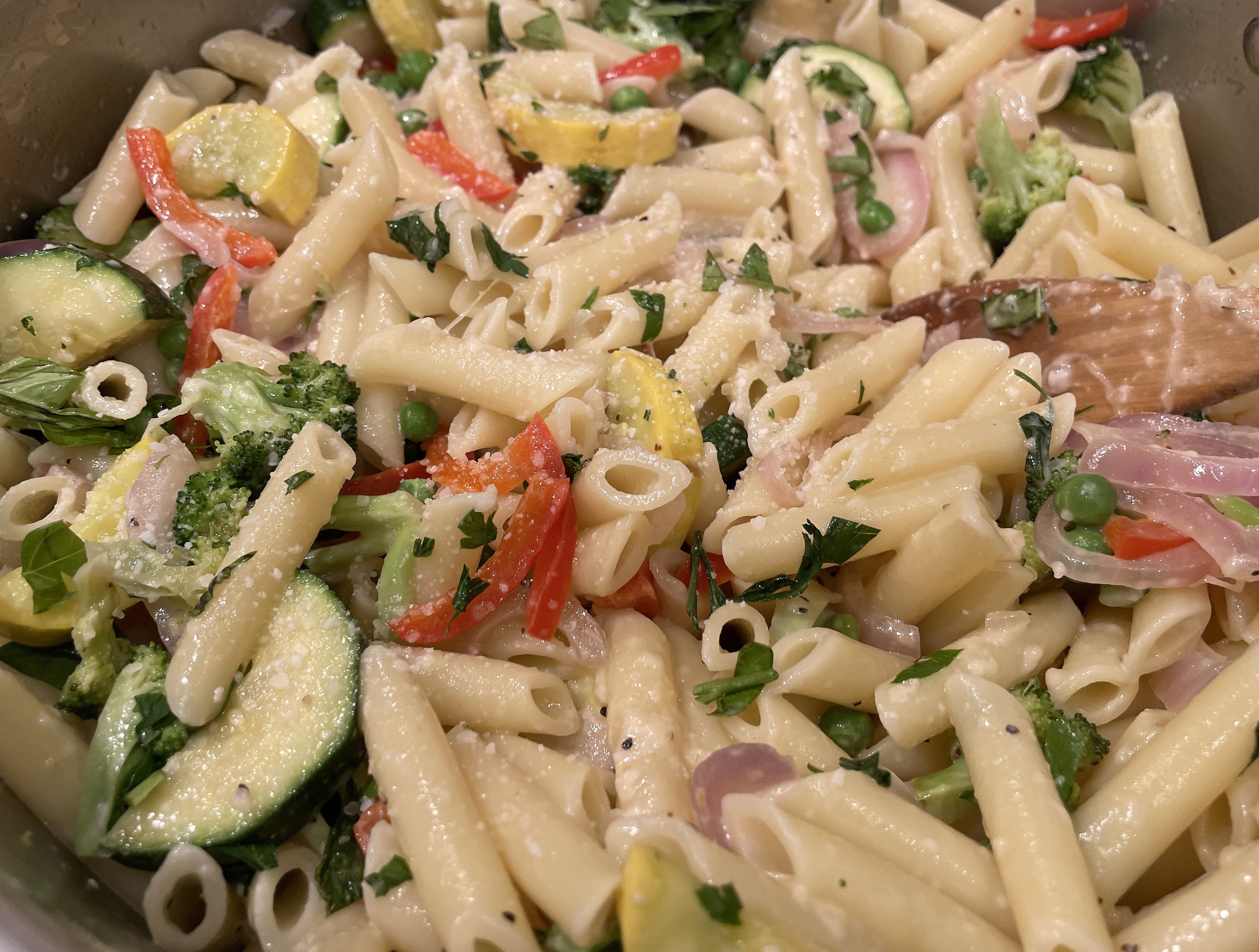
Monday: Pasta Primavera
Wednesday: Dinner at ‘Uncorked’ w/ Hilda, Louise, David, Tim

Thursday: Skillet Porkchops with Miso Caramel
Friday: Dinner at PFC

Saturday: Big, Little Tomato Pie
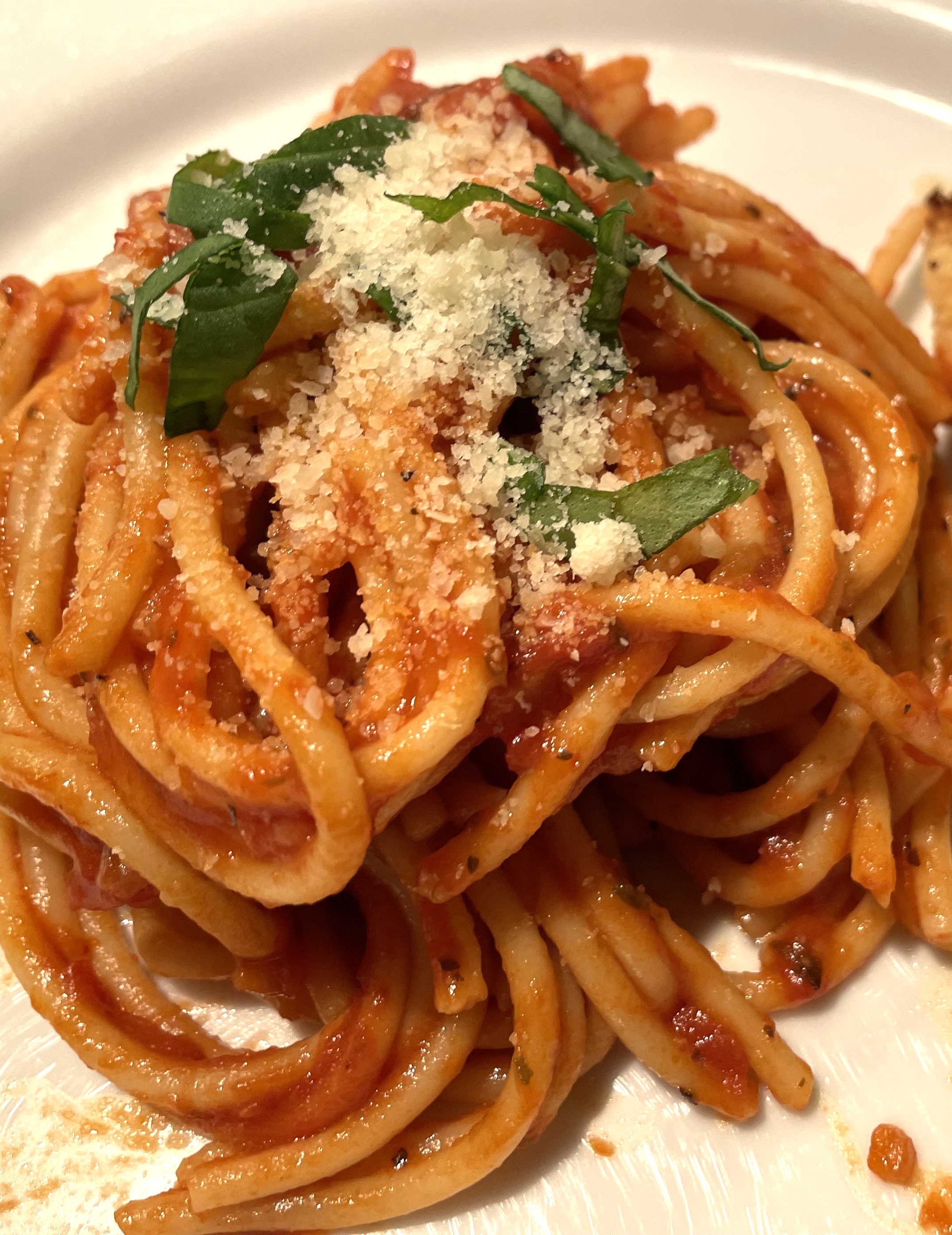
Sunday: Sunday Gravy with Sausage, Meatballs and Spaghetti
Cooking Out of Season
If you follow food writing, you will hear about chefs who only cook food that is local and in season and at its ripest. In addition to being self-righteous and a bit arrogant, surely, this is an exaggeration. To cook that way means forgoing pineapples for most of the US. Soft shell crabs wouldn’t make it as far north as Pittsburgh, nor oysters as far east as Downingtown. And as for avocados* or saffron or Mexican oregano or Hungarian Paprika, you would simply have to forget about them. And anyway, can anyone really tell when an avocado is at its ripest?
*Yes, I know that avocados are grown in California but I let the sentence stand because it led into the next sentence containing the perennial question about how to gauge an avocado’s ripeness.
I’m sure you get the point, but my real point is to justify some of my own menu choices. I mean, I can get blue crabs from Maryland shipped overnight, and deep dish pizzas from Chicago, and caviar from Russia (if I could afford it) and why would I want to reduce the scope of my culinary imagination or capacity?
And two weeks ago, after the wonderfully hearty four-inch thick ribeye cooked directly on the coals with potatoes and onions, I felt a need for something a bit lighter on Monday. I suppose we could have gone with lightly dressed lettuce and cucumber, but that, you certainly know, if you’ve been following this blog, is not how I roll or cook, for reasons both gastronomic and social.
Because we are pasta addicts, I decided on pasta primavera. Now, I’ll admit to feeling a bit guilty about this choice since primavera means (in Italian) first or early spring. And here was I, proposing to cook this early spring dish in mid-September. The in-season, only when it’s at its best, chefs who charge $20.00 for a plate of baby radishes, would, of course be appalled. But Beez was not.
One other note. I never order pasta primavera at an average restaurant for two reasons. First, it is usually made with angel hair pasta, which pasta, in my opinion, is only good when broken up and used for thickening soups. Served with vegetables, it is so fine that when you twirl it on your fork all the vegetables fall out of the twirl and you are left with a wad of pasta as thick as the tobacco baseball players used to chew while waiting for their interminable games to be over. Second, pasta primavera at an average restaurant is always, not sometimes, or even often, but always under-seasoned. A good pasta primavera is seasoned correctly and the al dente pasta (I would suggest penne rigate here) is finished off with seared vegetables simmered in broth, a touch of cream, some pasta water and just enough parmigiano or pecorino to make a savory but light sauce.
And that, of course, is how we cooked our out-of-season primavera pasta two Mondays ago. Beez was happy and so I was happy and here’s a recipe you can use to make your significant others happy:
Pasta Primavera
(adapted from Dan Pelosi – NYT,6/7/24)
Timing: About 35 minutes, make it 45 if you’re not good at chopping
Ingredients: Makes 6 servings
3 tablespoons olive oil – 1 pound penne or other short pasta – Cup frozen peas
1 red onion, thinly sliced – 1 red bell pepper, thinly sliced
2 cups of bite-sized broccoli florets – 1 zucchini, sliced into ¼-inch half moons
1 yellow squash, sliced into ¼-inch half moons – 1 medium shallot, minced
4 garlic cloves, thinly sliced (we used 1 clove, grated)
1 cup vegetable broth (we used chicken broth)
1/2 cup heavy cream – 1 tablespoon lemon zest and the juice of that lemon
½ cup grated parmesan and more for serving
Salt and ground black pepper – Chopped basil, for serving – Chopped parsley, for serving
Prep:
Put a large pot of water on the stove and bring it to a boil and then toss in two good handfuls of salt. Slice and grate the vegetables.
Cook:
Heat a large skillet or Dutch oven on medium and add the olive oil. When the oil is hot, add the onion, bell pepper and broccoli and cook, stirring from time to time until broccoli is softened just a bit – maybe 5 minutes.
Add the zucchini and yellow squash and cook another 4 minutes or so. The vegetables should be tender but still crisp. Season with salt and pepper and remove vegetables from pan and set aside.
By now your pasta water should be boiling. Add the pasta and cook per the package directions to al dente. Before draining the pasta, put a couple of ladles full of the pasta water in a bowl.
While the pasta is cooking, to that same pan in which you cooked the vegetables, still hot and over medium, add the butter, shallot and garlic and cook for 2 minutes. Now add the broth, bring to a boil and then lower the heat to medium. Stir in the heavy cream, lemon zest and juice and bring to a simmer and cook for 5 minutes, until the sauce thickens a bit.
Drain the pasta when it is cooked (don’t forget to save some of the pasta water).
Add the reserved vegetables, the pasta and the peas to the skillet or Dutch oven with the sauce and stir to combine. Now add the parmesan and stir until combined with the sauce (if the sauce is too thick, thin it with pasta water – you may not need to do this). The vegetables and pasta should be well coated. Correct seasoning with salt and pepper.
Serve garnished with basil, parsley and more parmesan.
 whatwecookedlastweek