July 1 – July 13, 2024
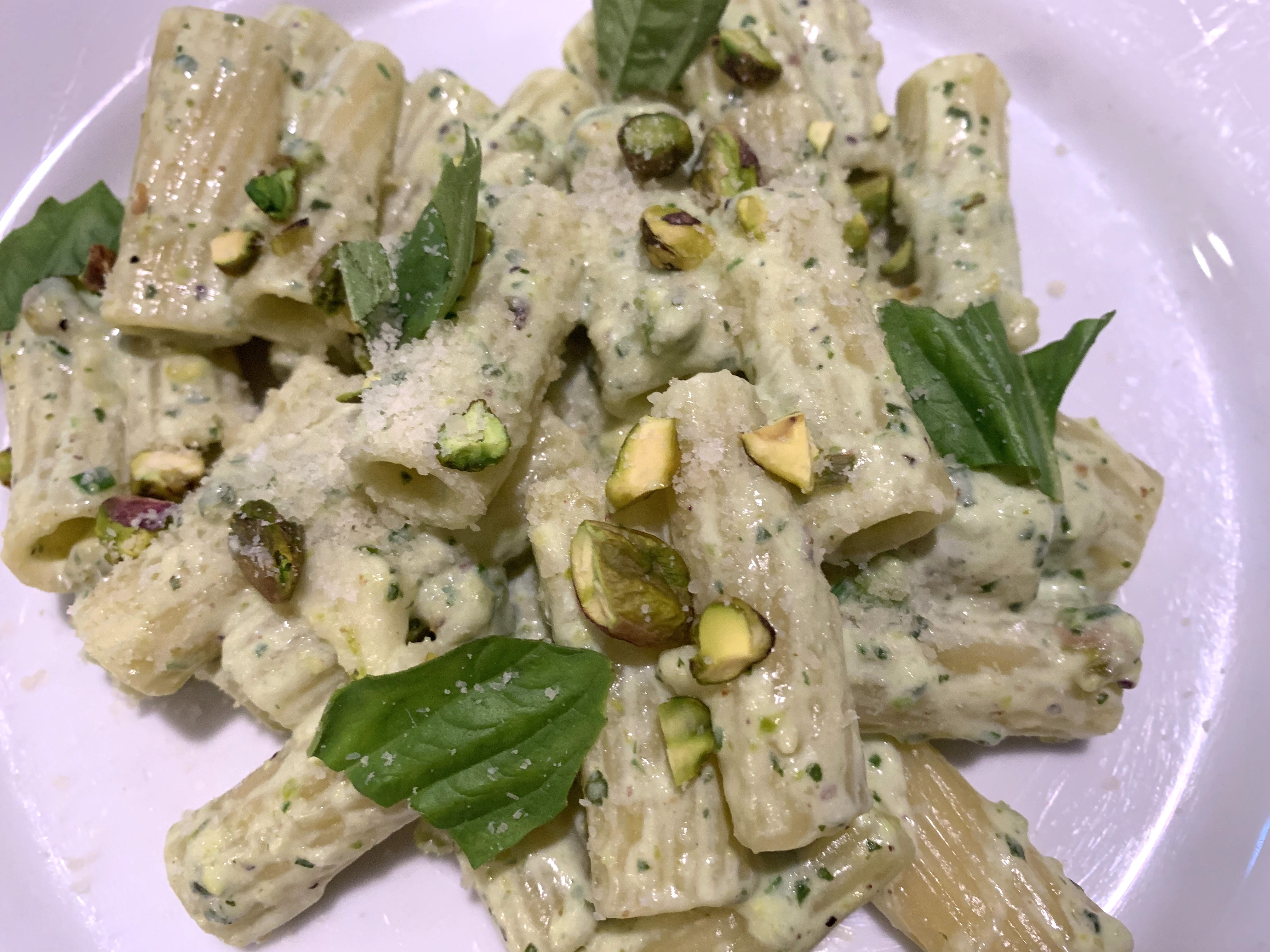
Tuesday: Rigatoni with Pistachio-Ricotta Pesto

Friday: Crispy Salmon Sautéed Onions and Peppers with crispy potatoes
[Beez vetoed the pictures we took – just imagine some very good looking and witty men and women enjoying a great dinner – Julie is a fabulous cook]
Saturday: Dinner Party at Julie’s

Sunday: Roasted Fennel and Sausage Pizza
Monday: Grilled Pork Tenderloin with Wedge Salad and BBQ Corn Ribs

Wednesday: Basil and Tomato Fried Rice

Thursday: Skillet Chicken Thighs with Schmaltzy Potatoes
[Note – you will see that we have compressed two weeks into one. The reason for that has to do with a combination of personality traits I’d rather not go into or own up to.]
Schmaltz and the Indispensable Cast Iron Skillet
Chicken fat (schmaltz), like bacon fat, is a magnificent cooking ingredient. It falls just shy of being indispensable because there are fine substitutes for it. But a cast iron skillet is on beyond indispensable – there is no substitute for it. If you season it correctly, it is virtually non-stick. It retains heat better than any other material and produces more radiant heat so that foods cook more evenly. You can put it in the oven, unlike many modern non-stick pans. You can put it on the stove-top. You can put it on your outdoor grill. And, as any red-blooded American knows from the chuck-wagon segments of Western movies and television shows – you can put it directly on a wood fire. I would give up my All-Clad and my German non-stick before I would give up my Lodge cast-iron skillet.
Another advantage of cast-iron is that it is not expensive. Lodge makes a number of cast-iron skillets, the classic stove-top size costs less than $20.00 on sale. There is no disadvantage to cast iron, but you do need to remind yourself of one thing – especially if the skillet is holding a whole chicken and you are pulling it from the oven – cast iron is bone-deadening heavy. I do worry that my arthritic wrists may reach a stage where I can no longer pick up these skillets with one hand. But that heft, that dense weight of iron is, of course, what gives these skillets their ability to retain heat and to develop an essentially non-stick surface.*
*I would not cook eggs, rice or potatoes in cast iron, but there are people who do and you really can’t ruin cast iron. On the other hand the work it takes to scrape or wire brush them clean and then to re-season them is daunting – so cook the eggs, rice and potatoes on stainless or modern non-stick. After cooking anything else – the chicken in the recipe below, e.g. – you’ll just need to give the skillet a good rinse and a wipe.
If you remain unconvinced that you need a cast iron skillet, I’ll make a deal with you. Buy one and cook the recipe below in it and, if you are still not convinced, send me the bill (along with the skillet, of course).
Note: There is a digital cookbook entitled The Book of Schmaltz: A Love Song to a Forgotten Fat. I recommend looking into it.
Skillet Chicken Thighs with Schmaltzy Tomatoes
[adapted from Melissa Clark, Pittsburgh Post-Gazette, 7/11/24]
If you, too, decant chicken and duck fat for use in future cooking, consider chicken fat which is used in this recipe to produce a delicious dressing for the chicken.
Timing: 40 minutes at most
Ingredients: Serves four
1 teaspoon fennel seeds (substitute cumin or coriander seeds)
1 teaspoon lemon zest, 1 teaspoon kosher salt
4 bone-in, skin-on chicken thighs
2 cups of cherry tomatoes
Small red onion halved and thinly sliced
Pinch of red-pepper flakes – more for serving, Olive oil for drizzling (we did not use)
½ cup torn basil or mint leaves (we used basil)
Prep:
Heat oven to 475 F
Heat a cast iron skillet on the stove top over medium high.
Trim any long flaps of skin that extend beyond the thighs – do not trim any fat from the chicken.
Grind the seeds in a mortar and pestle and mix them with the salt and lemon zest.
Rub the herb mixture all over the thighs and under the skin (loosen it first).
Halve tomatoes, slice onion.
Cook:
When the skillet is hot, add the chicken, skin-side down. Cook for about 8 minutes, or until skin turns a dark golden-brown. Note – if the skin sticks to the pan you have not cooked it long enough or at the correct temperature.
When the thighs are well-browned, turn them over and place the skillet in the oven and cook for 25 minutes.
While chicken cooks, combine tomatoes and onion slices in a large bowl and toss with a pinch of salt and red pepper flakes.
Finish and Serve:
Remove the chicken from the oven and place the thighs on a platter. Pour the chicken fat from the skillet into the tomato mixture. Stir to combine and add more salt, if needed. Pour the tomatoes around the chicken on the platter. Drizzle some olive oil over, if you wish – we didn’t. Top with basil or mint leaves.
 whatwecookedlastweek